Professional Information
Effect of IPL,hot compress and masage combined with Tobra‑Dex treating MGD
2023-07-07
Dry eye
With the continuous development of electronic technology and the information society in recent years, people spend correspondingly more time using electronic devices. One adverse health consequence of this shift is that the number of patients with meibomian gland dysfunction (MGD) has increased year by year with a trend toward younger onset. To explore a safe and effective therapeutic regimen for meibomian gland dysfunction, a study titled 《Observation on the Efficacy of Intense Pulsed Light, Warm Compression and Massage Combined with Tobramycin and Dexamethasone Ophthalmic Ointment in the Treatment of MGD-Related Dry Eye》, published in the journal 《Chinese and Foreign Medical Research》in June 2023, preliminarily confirmed that the combined therapy achieves favorable outcomes for MGD-related dry eye. It can effectively relieve patients’ dry eye symptoms and reduce the incidence of adverse reactions.

To observe the effect of intense pulse light, hot compress and masage combined with Tobramycin and Dexamethasone Eye Ointment in the treatment of dry eye with meibomian gland dysfunction.
A total of 124 patients withmeibomian gland dysfunction dry eye from People's Hospital Affiliated of Quanzhou Medical College from January 2021 to September2022 were selected as the study objects, according to different trealment methods, they were divided into control group and observationgroup, with 62 cases in each group. The control group was treated with hot compress and massage (mite removal wet hot compres +meibomian gland massage) + Tobramycin and Dexamethasone Eye Ointment. The observation group was treated with intense pulsed light + hot compress and massage + Tobramycin and Dexamethasone Eye Ointment.
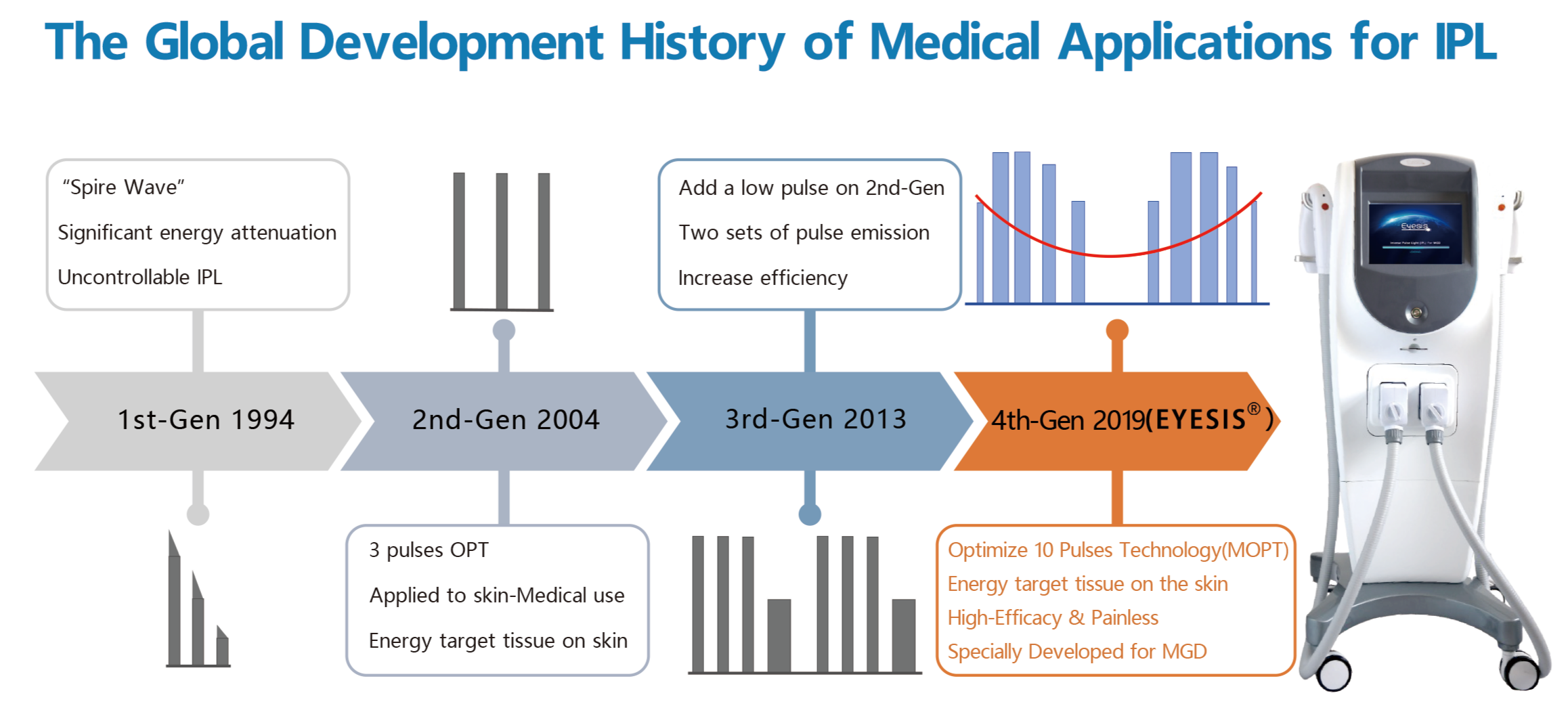
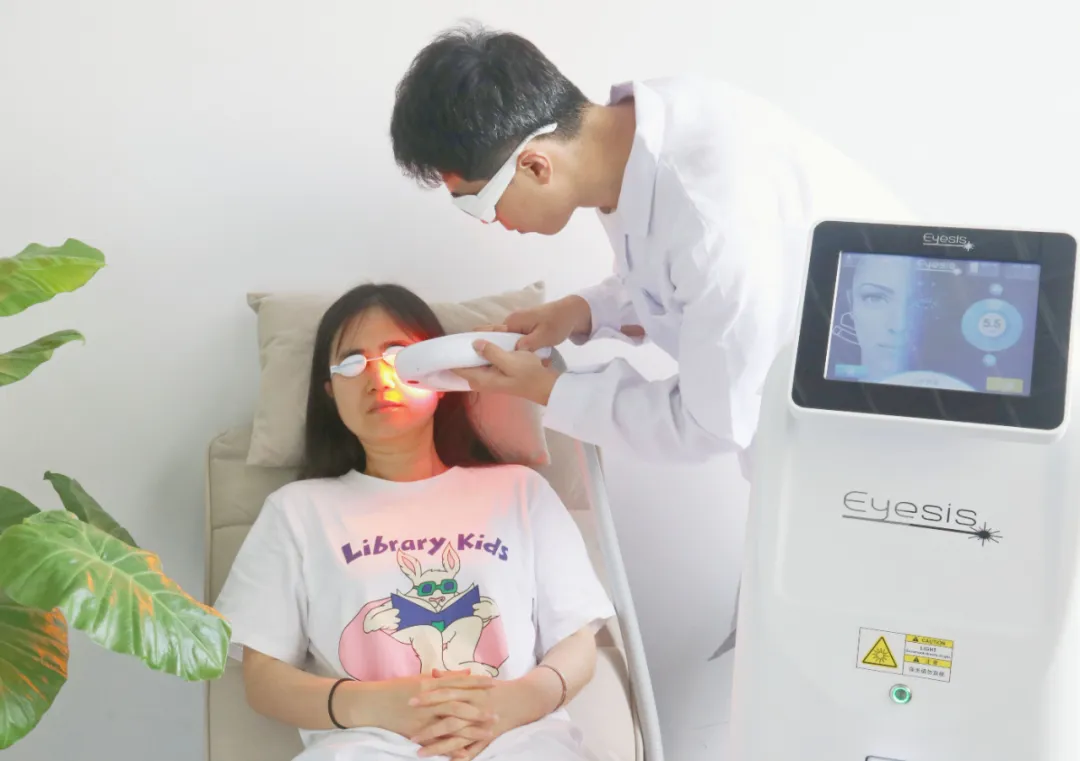
The EYESIS ophthalmic intense pulsed light therapeutic instrument was used for IPL treatment of the patients. The initial IPL energy was set at 8 J/cm² and increased incrementally by 0.5 J/cm² according to the child’s tolerance (no pain or only mild warm sensation), up to a maximum of 12 J/cm². All treatments were performed by the same physician to ensure consistency. The child was placed in the supine position. Protective goggles were worn over both eyes, and coupling gel was applied to the lower eyelids. Holding the treatment handpiece, the physician delivered IPL irradiation in a fan-shaped pattern from the nasal side to the temporal side of the lower eyelid, with 5 irradiations per eye. IPL treatment was administered once weekly for a total of 3 sessions.
The treatment effect, subjective symplom score of dry eye.meibomian gland function score, tear film rupture time (BUT) and comneal fluorescein staining score before and after treatment and theincidence of adverse reactions afer treatment were compared between the two groups.
The total effecetive rate of the bservationgroup was significanly higher than that of the control group, the difference was statistically significant (P0.0S). Before treatmen, therewere no significant diferences in the subjective symptom score, meibomian gland function score, BUT and comeal fluorescein stainingscore between the two groups (P>0.05). Afier treatnent, the dy eye subjective sympom score, meibomian gland function score, BUT andcomeal fluorescein staining score in the bservation goup were significantly better than those in the control group, the diferences werestatistically significant (P<O.05). The total incidence of adverse reactions in the observation group was lower than thatin the control groupthe diference was statistically significant (P<0.0S).
Intense pulsed light (IPL) is one of the commonly used clinical therapies for MGD-related dry eye. Its efficacy has been verified and recognized in many hospitals as well as in European and American countries. IPL can directly act on the meibomian glands. By accelerating blood circulation around the eyes, it improves the fluidity of meibum secretion within the meibomian glands and further promotes their normal secretion. Meanwhile, studies have found that IPL generates heat. Through thermal radiation, it can kill bacteria and relieve inflammatory responses, reduce the bacterial load around the eyelids, improve the ocular surface microenvironment, stabilize the tear film and boost tear secretion. In addition, IPL can inhibit the aging and desquamation of superficial skin cells and exert a certain antioxidant effect.
The combination of EYESIS intense pulsed light and hot compress and massagewith Tobramycin and Dexamethasone Eye Ointment has a good effect in the treatment of meibomian gland dysfunction dry eye, which caneffectively improve the symptoms of dry eye and reduce the incidence of adverse reactions.