Professional Information
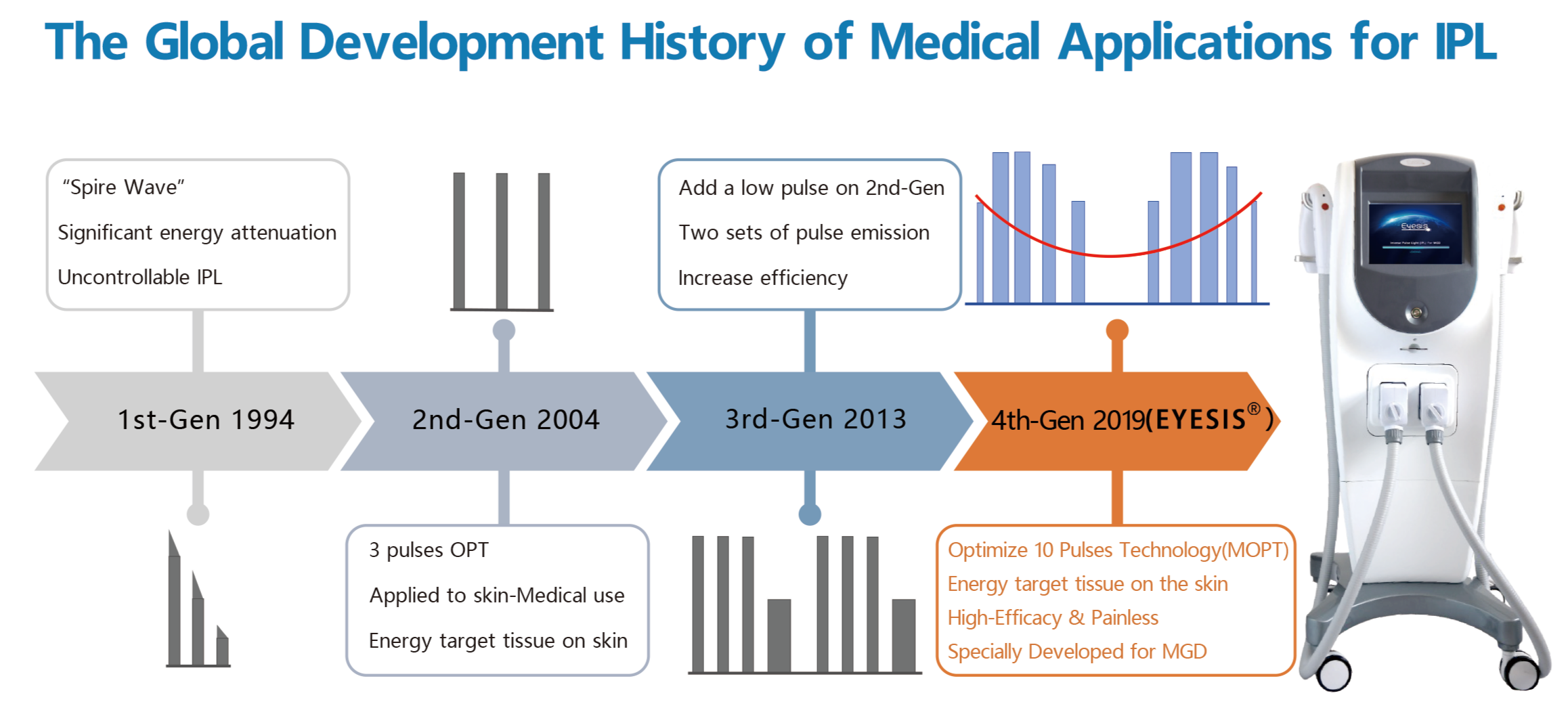
Clinicians provide more precise descriptions of the 4th-generation MOPT IPL
2022-12-30
Dry eye
In November 2022, a paper published in 《Ophthalmology and Therapy》(IF:4.927), titled 《The Efficacy and Safety of New-Generation Intense Pulsed Light in the Treatment of Meibomian Gland Dysfunction-Related Dry Eye: A Multicenter, Randomized, Patients-Blind, Parallel-Control, Non-Inferiority Clinical Trial》, provided a more precise description of the 4th-generation MOPT (Multiple Optimal Pulse Technology) intense pulsed light technology for ophthalmology.

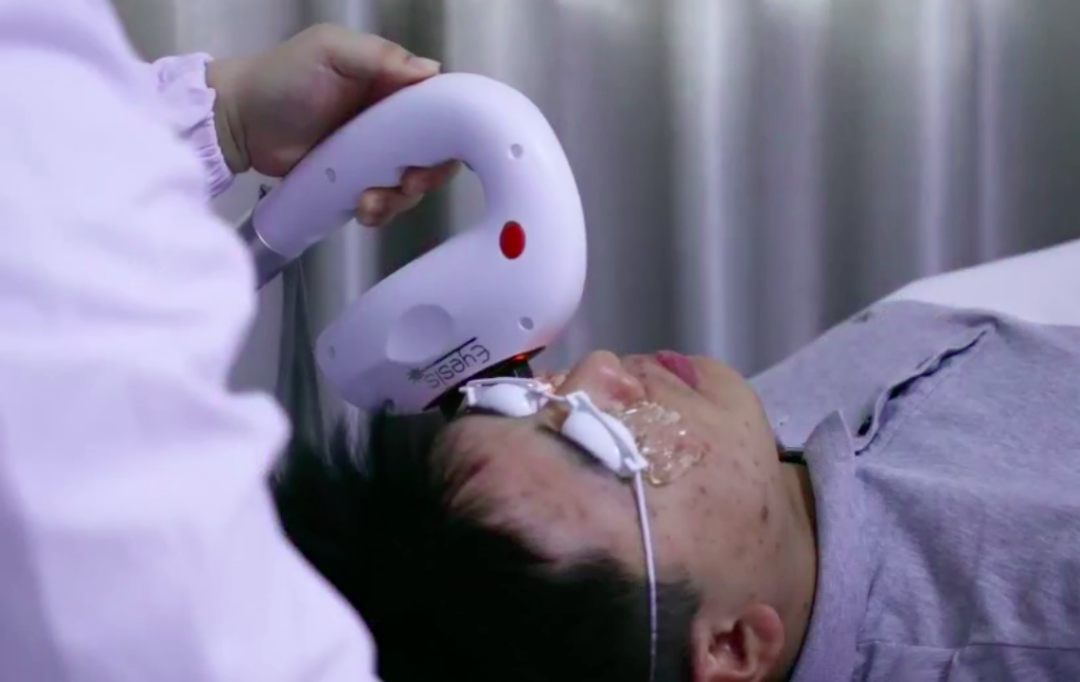
The therapeutic efficacy of IPL for MGD mainly depends on the wavelength, pulse width, number of pulse trains and energy intensity of the high-intensity light emitted by the device. These parameters have been optimized in the design of the 4th‑generation MOPT light pulse technology to achieve superior clinical efficacy and safety. The EYESIS device features an energy density ranging from 5 J/cm² to 15 J/cm², with 21 adjustable energy levels stratified according to skin phenotype and MGD severity, enabling more personalized and precise treatment. Meanwhile, the number of sub-pulses has been increased to 10 pulses per train. This design allows more energy to be effectively delivered to the meibomian glands and improves their function.
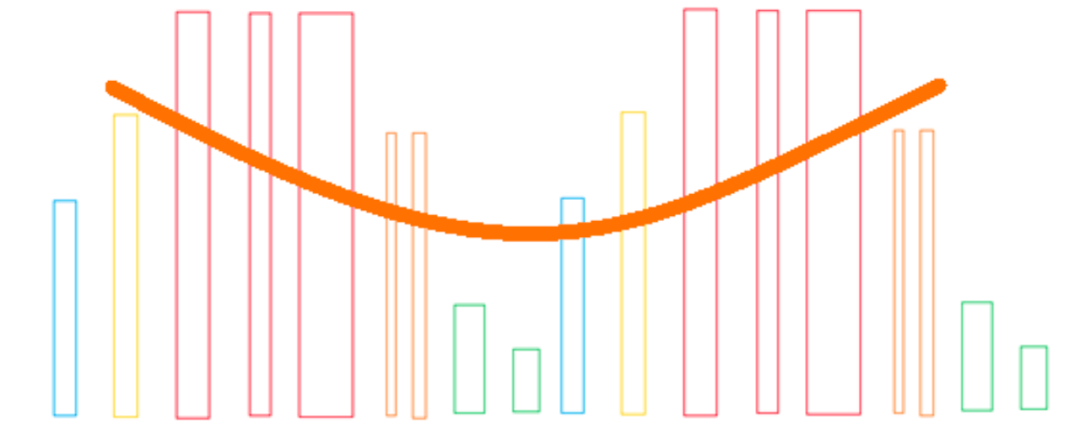
In addition, EYESIS light pulses are delivered in the "SMILE" profile, which stands for: Skin preheating, Energy infusion, Maintaining temperature, Infusion repeated, Latent heat evacuation. This continuous cyclic mechanism not only facilitates deeper penetration of light pulse energy into the meibomian glands, but also reduces energy loss in the skin and subcutaneous tissues to improve treatment efficiency and lower the risk of thermal injury in the treated area.
Changes in meibomian gland secretory capacity and meibum (properties and quality) play a central role in the progression of MGD. Our study demonstrates that IPL treatment can significantly improve the quality and expressibility of meibomian gland secretions. The thermal effect delivered by IPL therapy melts and liquefies meibum in MGD, clears ductal obstruction, and promotes the release of meibum into the tear film. Compared with the conventional E-Eye device, EYESIS exhibits greater clinical advantages in improving meibomian gland secretory function and meibum quality.
Beyond thermal effects, reduction of bacteria and parasitic Demodex on the eyelids and eyelashes represents another potential mechanism of IPL treatment. Demodex folliculorum and its symbiotic bacterium Bacillus oleronius can release toxic substances, increase meibum viscosity, obstruct gland orifices, and induce blepharitis and MGD. Histological analysis confirms that the near-infrared pulse band of IPL can induce coagulation and necrosis of Demodex folliculorum.
In addition to improving meibum secretion, IPL therapy also exerts a positive effect on ameliorating the structure of meibomian glands and the eyelid margin. In our study, both gland dropout and atrophy were significantly improved after IPL treatment. Such improvements in the microarchitecture of meibomian glands are attributed to the photobiomodulatory effect of IPL. EYESIS is more effective than E-Eye in alleviating gland atrophy. Therefore, given EYESIS’s superior impact on meibomian gland structure, we consider EYESIS a preferable therapeutic option for patients with severe advanced MGD.
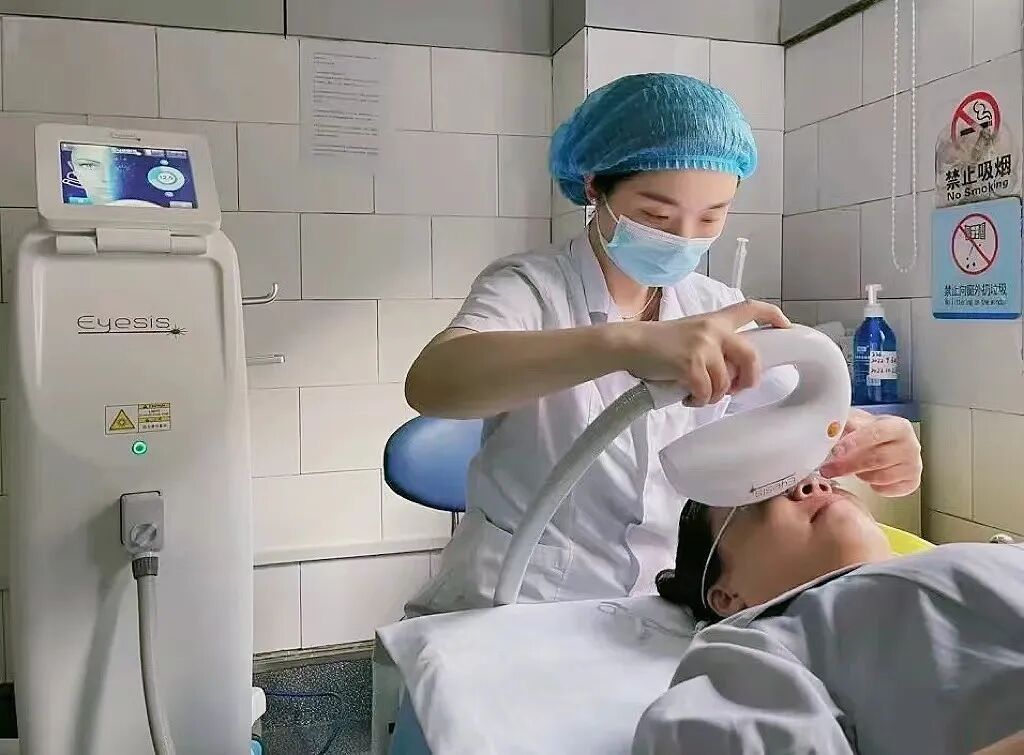
Our study also found that both the Schirmer test and TMH improved significantly after EYESIS treatment, which was not observed in the E-Eye treatment group. In fact, there are currently no publications specifically investigating the effect of IPL on lacrimal gland function. Nevertheless, several reports have shown that cutaneous laser therapy can increase sweat gland secretion and cause hyperhidrosis. We therefore hypothesize that the "SMILE" mode of the EYESIS device enables deeper energy penetration through the skin, stimulating the accessory lacrimal glands or palpebral lacrimal glands to promote aqueous tear secretion via thermal effects or sympathetic responses. In addition, EYESIS treatment markedly improves the ocular surface environment, including restoration of damaged corneal nerves and enhancement of corneal sensitivity, thereby restoring compensatory tear production.
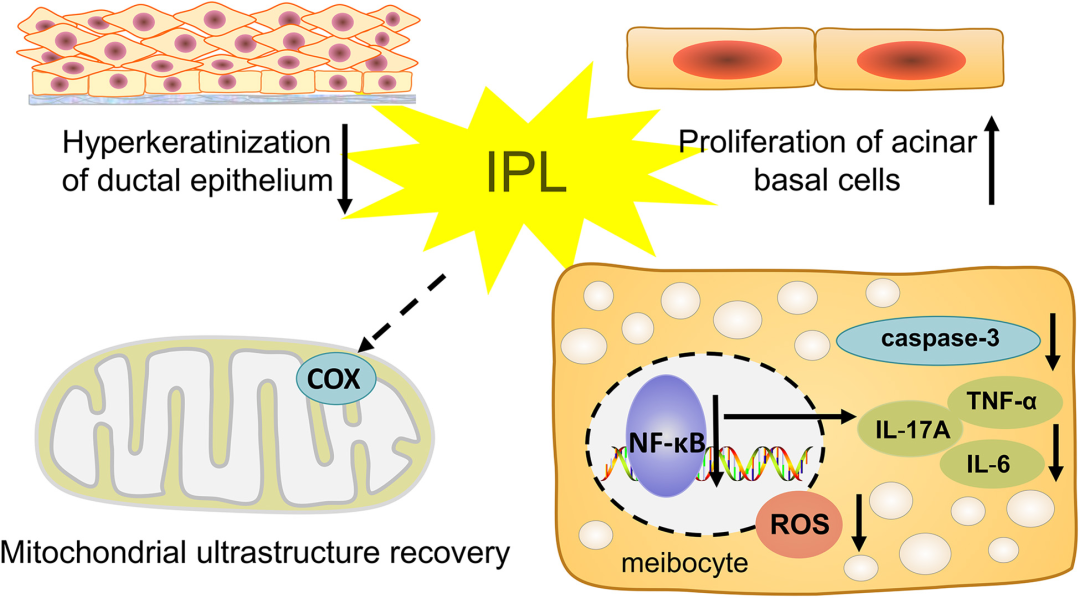
CFS (corneal fluorescein staining) was markedly reduced after EYESIS treatment, with more than 90% of patients showing no staining. The anti‑inflammatory effect of IPL therapy may serve as a key mechanism for repairing corneal damage. IPL can eliminate telangiectasia at the eyelid margin and suppress major inflammatory mediators on the ocular surface, including interleukin (IL)-6, IL-10, IL-17A and tumor necrosis factor‑α (TNF‑α). Therefore, downregulation of ocular surface inflammation following EYESIS treatment reduces injury to the corneal epithelium and provides a stable microenvironment for its repair.
As a new-generation IPL device, EYESIS demonstrates greater clinical benefits than E-Eye in improving meibomian gland function, including meibomian gland secretory function, gland dropout and meibum quality. In addition, we observed a significant improvement in tear volume after EYESIS treatment, which has not been identified with E-Eye or any other IPL devices. We believe that the improvement in meibomian gland function contributes to a more stable ocular surface environment, restoration of damaged corneal nerves, and further enhancement of compensatory tear production.