Professional Information
A multicenter parallel controlled study shows that patients gain greater benefit
2022-12-09
Dry eye
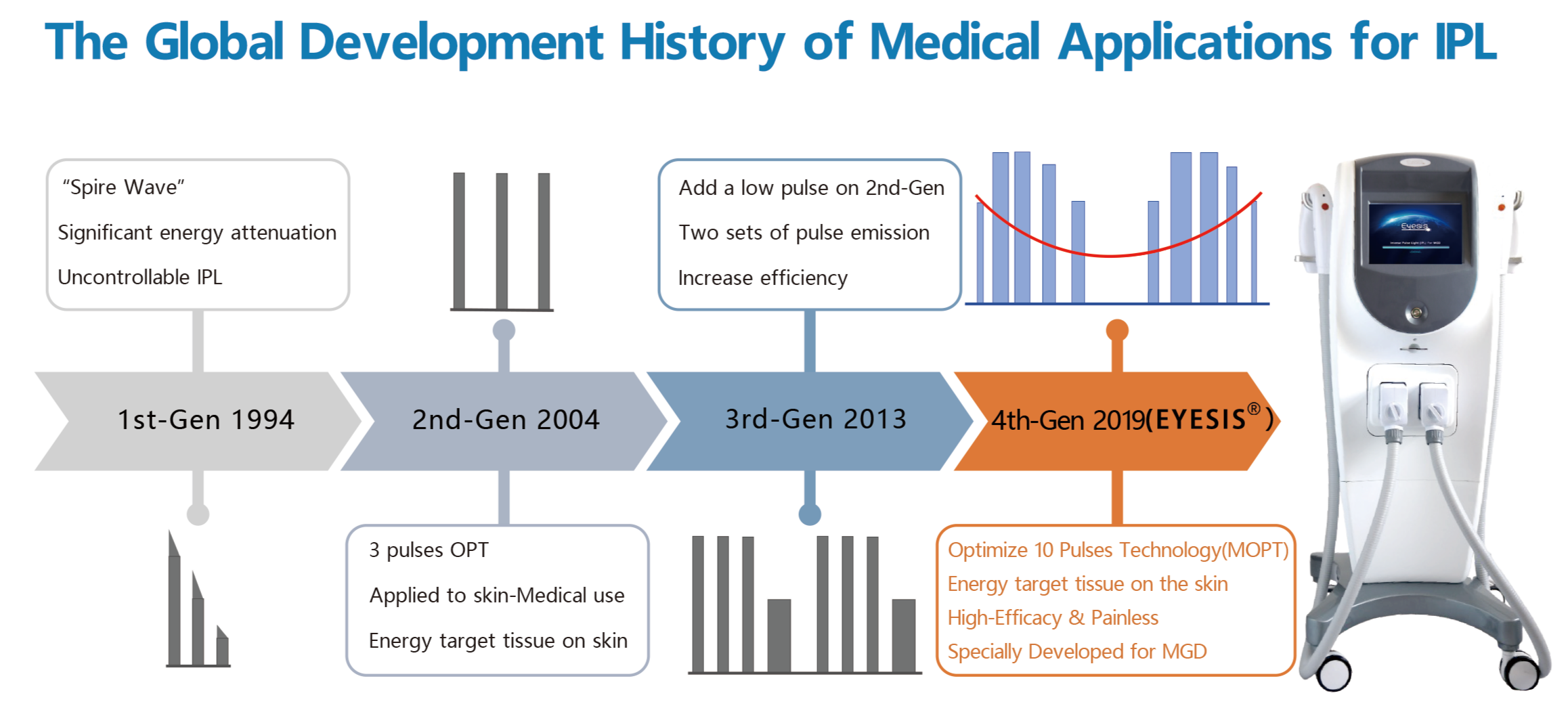
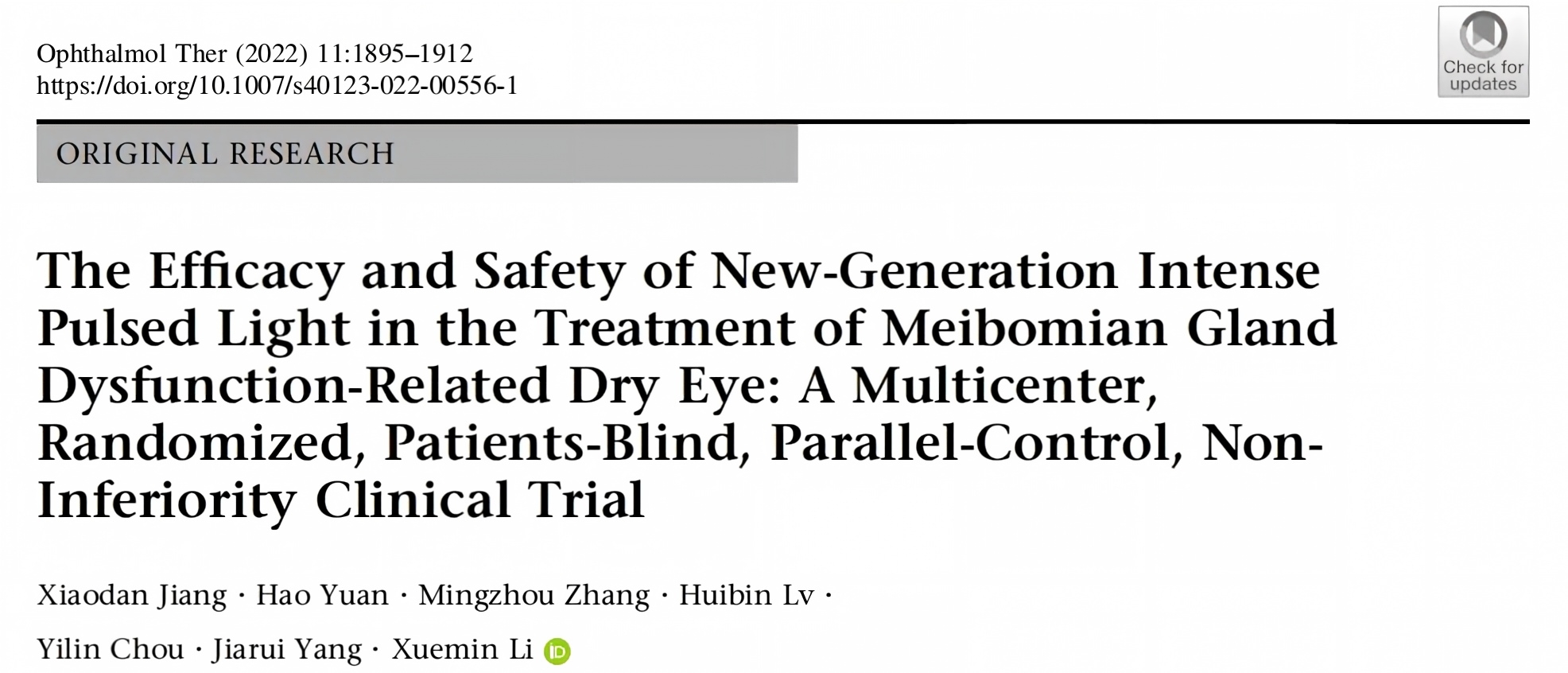
MDC-Healthcare has long upheld its corporate philosophy of “Leading with Expertise · Co-creating the Future”. The EYESIS® 4th-generation MOPT photopulse dry eye treatment system, developed with meticulous craftsmanship, has gained recognition from numerous clinicians in clinical practice. The company continues to conduct collaborative clinical research to generate further evidence-based medical data and provide more reliable clinical treatment data for EYESIS®.In November 2022, a multicenter, randomized, patient-masked, parallel-group, non-inferiority clinical trial published in Ophthalmology and Therapy (IF: 4.927) attracted widespread attention. The study compared the efficacy and safety of MDC-Healthcare’s EYESIS® in treating meibomian gland dysfunction (MGD)-associated dry eye disease with the E-EYE device manufactured by France’s E-SWIN.The results demonstrated that as a new-generation IPL device, EYESIS® is effective and safe in alleviating signs and symptoms of MGD-related dry eye disease, with an efficacy rate not inferior to conventional IPL devices. Furthermore, EYESIS® showed additional clinical benefits over E-EYE in symptom relief, improvement of tear film stability and restoration of meibomian gland function.

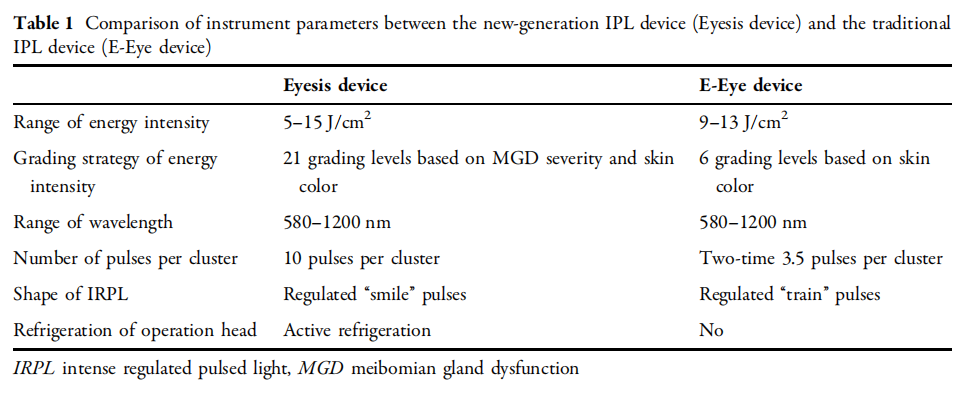
In recent years, intense pulsed light (IPL) has demonstrated robust clinical efficacy and safety in the treatment of MGD-associated dry eye disease. However, conventional IPL devices are limited in the range and grading levels of pulse intensity (which mainly depend on the severity of MGD, independent of individual skin pigmentation). Consequently, conventional IPL treatment may suffer from inadequate precision and poor targeting, and its efficacy for severe and refractory MGD remains uncertain. As shown in Table 1, the EYESIS 4th-generation MOPT photopulse device developed by MDC-Healthcare represents a new generation of IPL apparatus.
It delivers the Multiple Optimized Pulse Technology (MOPT), featuring a “Smile” shape (as shown in the figure below).
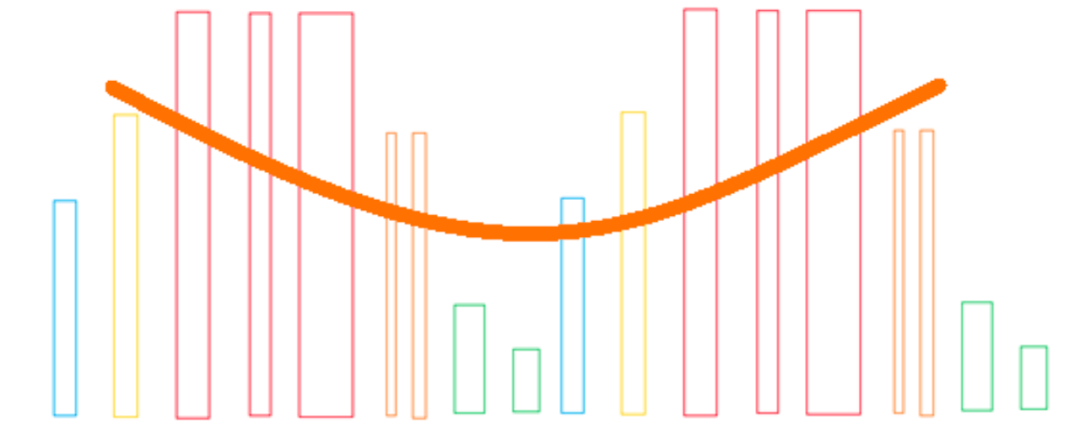
This design offers a wider range of energy intensity, enabling more precise treatment tailored to skin phenotype and the severity of MGD. On the other hand, previous reports have indicated that three conventional devices from different brands have been used in the clinical treatment of dry eye, namely E-Eye (E-SWIN, France), M22 (Lumenis, Israel) and Q4 (DermaMed Solutions, USA). Variations in wavelength, energy intensity and pulse width among these devices lead to differences in efficacy and safety during IPL treatment, which have not yet been explored and compared.
This study compared the clinical effective rate of EYESIS® with the conventional E-EYE device to verify its non-inferiority. A total of 164 cases were enrolled from two centers: the Eye Center of Peking University Third Hospital and Wangjing Hospital, China Academy of Chinese Medical Sciences. Comparative tests were performed on clinically relevant dry eye indicators. Baseline indicators showed no significant differences between treatment groups. The between-group difference in effective rate was −1.7% for the left eye and 1.6% for the right eye, confirming the non-inferiority of EYESIS® (p=0.927). At Day 7 and Day 14 after treatment, significant improvements in OSDI, TBUT, Schirmer test, TMH, CFS and meibomian gland signs were observed in the EYESIS® group (all p<0.05). The EYESIS® group achieved superior improvements in OSDI, TBUT, Schirmer test, TMH and meibum quality (all p<0.05). In addition, there was no significant difference in the incidence of adverse events between the two groups (p=1.000).
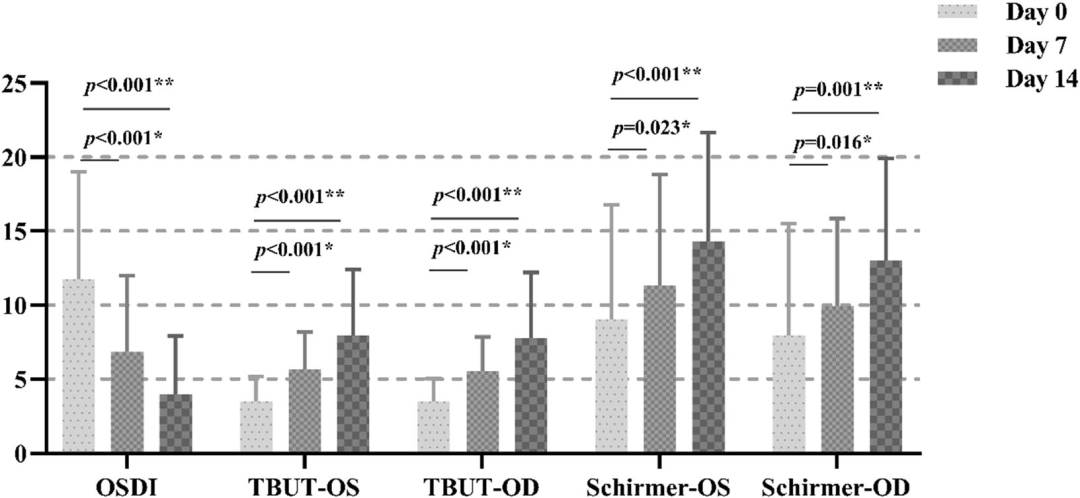
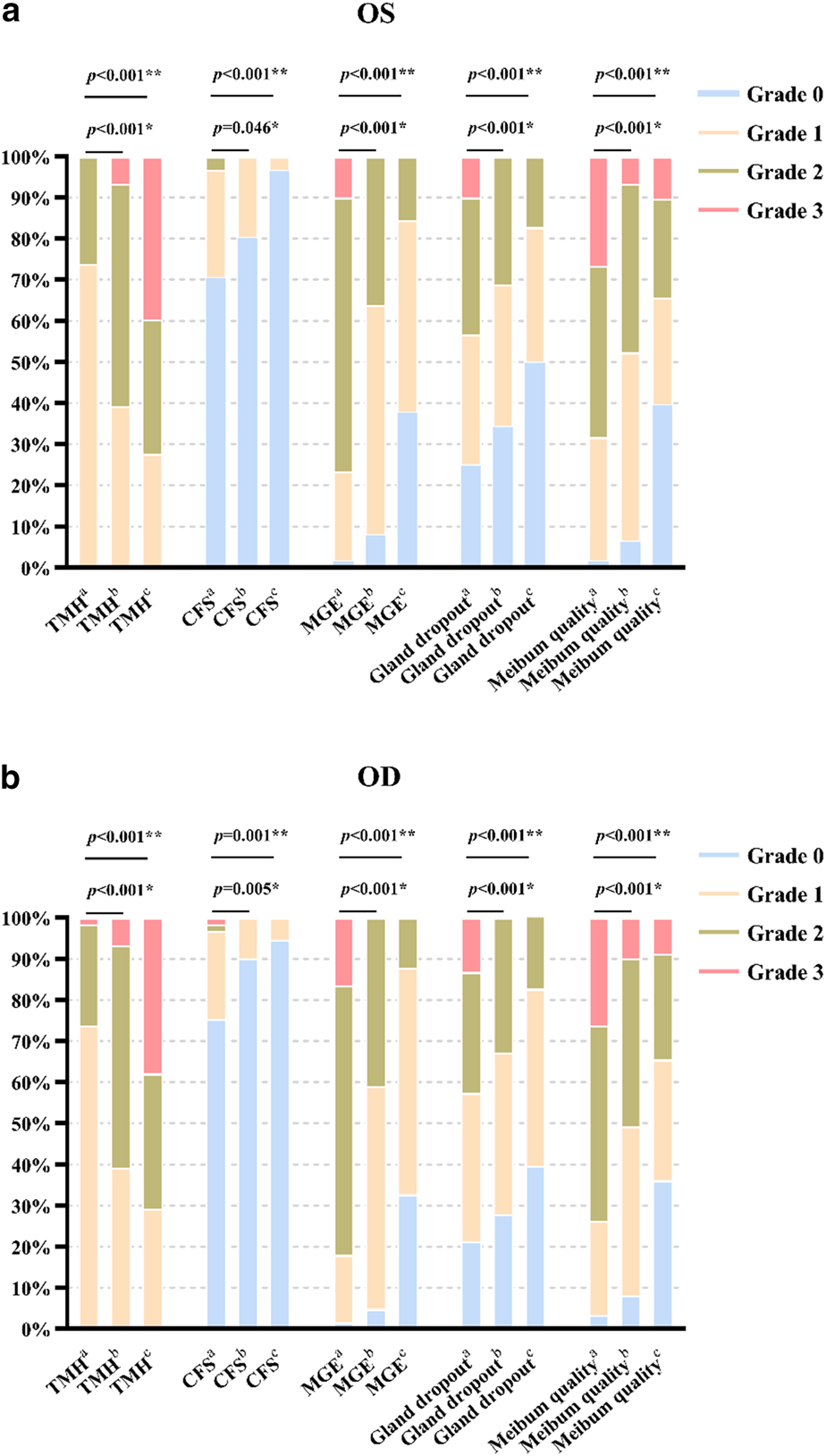
Meibomian gland dysfunction (MGD) is a highly prevalent cause of dry eye disease. The short duration of effect and unsatisfactory outcomes of conventional MGD therapies have driven the exploration of novel clinical treatment approaches, among which intense pulsed light (IPL) is one. Results of this non-inferiority randomized controlled trial (RCT) demonstrated the clinical efficacy and safety of EYESIS, a new-generation IPL device, for the treatment of MGD-associated dry eye disease. Its efficacy rate is consistent with previous studies when compared against the conventional IPL device E-EYE.
Treatment yielded improvements in patients’ subjective symptoms, tear film stability, tear secretion, epithelial keratopathy and meibomian gland function in patients with MGD. With optimized device parameters, EYESIS exhibits clinical advantages over E-EYE in alleviating dry eye symptoms, enhancing tear film stability, stimulating tear secretion and improving meibomian gland function among MGD patients.