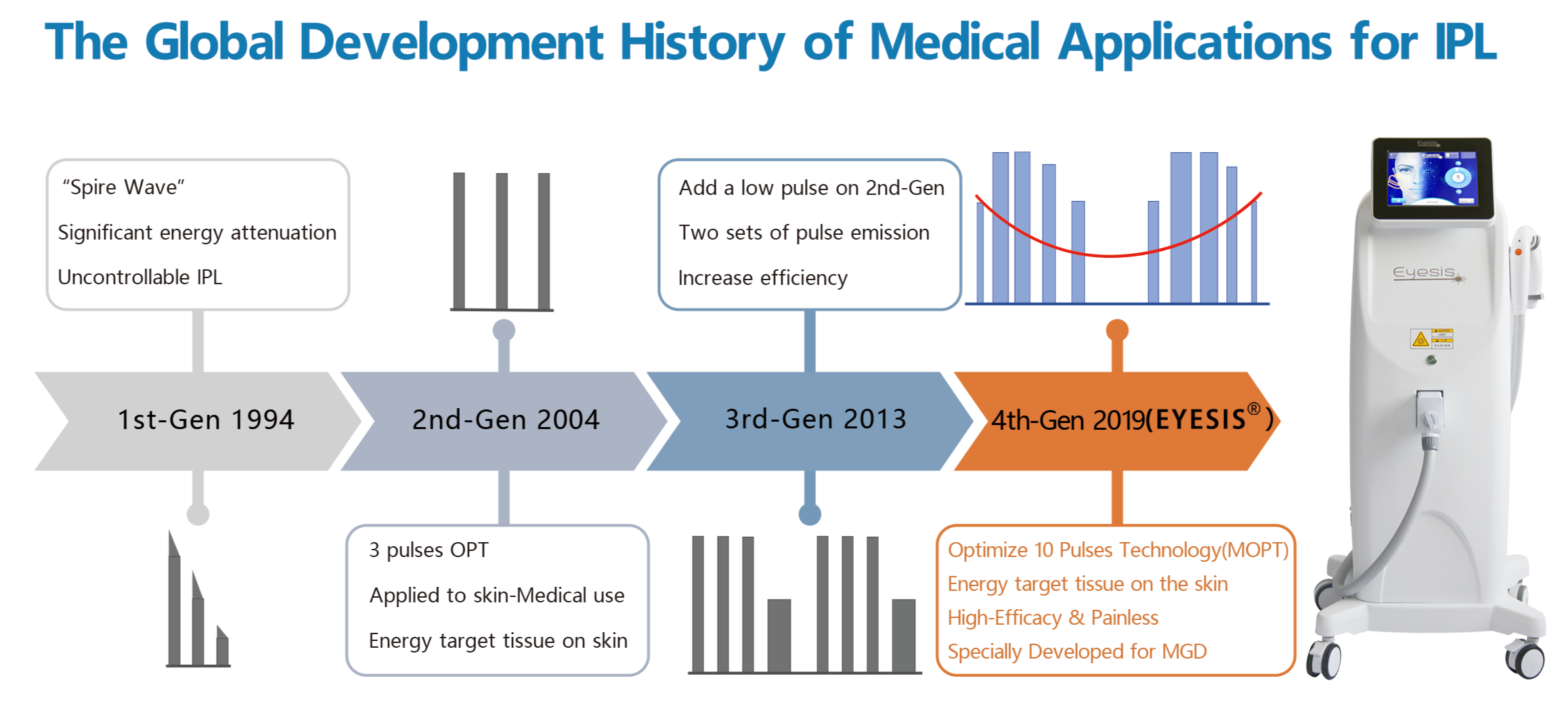
Professional Information
Clinical Observation on the Efficacy of IPL Therapy for Pediatric Chalazion
2023-10-30
Dry eye
Chalazion, also known as meibomian gland cyst, is a chronic granulomatous lesion caused by obstruction of the meibomian gland drainage ducts and retention of secretions. It may present as a single or multiple lesions. Since it is usually not accompanied by acute inflammation, the cyst is often noticed only when it grows large. Children are a high‑risk group for chalazion, especially infants under 3 years old. This condition is closely associated with vigorous meibomian lipid secretion, poor ocular hygiene or malnutrition in children. Traditional therapies for pediatric chalazion mainly include warm compresses, local injection and surgery, yet these approaches have certain limitations. For instance, warm compresses tend to yield poor outcomes if improperly administered or when the chalazion is large and has a long disease course. Local corticosteroid injection carries certain safety risks, and children show poor compliance with periocular injection. General anesthesia for surgery involves relatively high risks and fails to resolve recurrent chalazion. Therefore, to explore an effective, non‑invasive treatment with good acceptability among children, a study titled Clinical Observation on the Efficacy of Intense Pulsed Light Therapy for Pediatric Chalazion, published in Chinese Journal of Ophthalmic Medicine in June 2023, confirmed that EYESIS intense pulsed light can safely, effectively and non‑invasively treat pediatric chalazion.

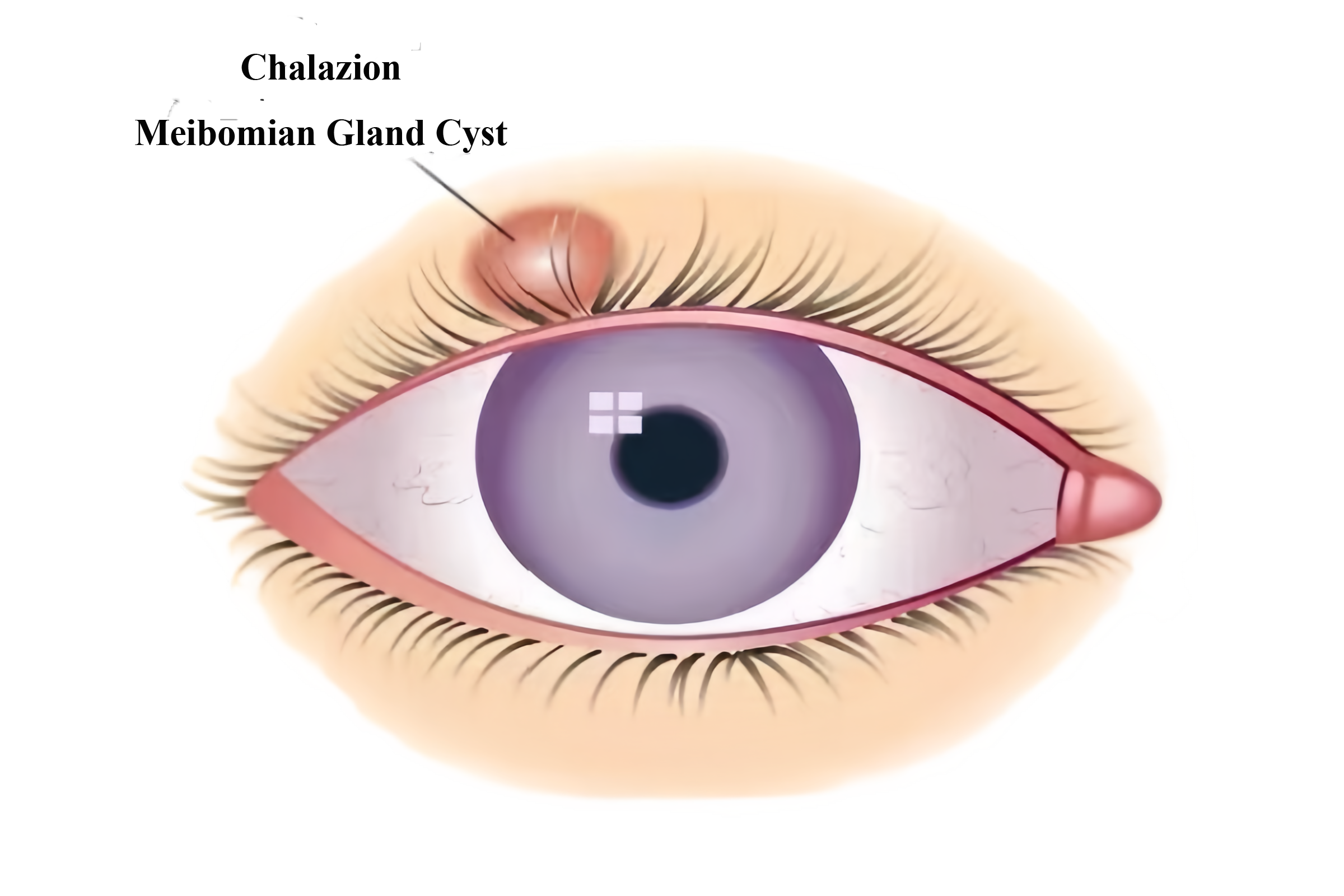
To explore the clinical efficacy of intense pulsed light (IPL) in the treatmentof chalazion in children.
A total of 21 children (33 eyes) with idiopathic chalazion diagnosed andtreated with IPL in the Dry Eye Center of the First Affiliated Hospital of Zhengzhou University from December2022 to March 2023 were collected. Among them, there were 8 males (13 eyes) and 13 females (20 eyes)with an average age of (4. 0 ± 2.3) years (ranged from 2 to 12 years). All patients were treated with EYESIS IPL around the eyes, and referred to before and after the treatment and follow-up phone call for patients' parents,the real description was obtained. The treatment results of chalazion were graded as follows; cure (chalazionsubsided), improvement (chalazion reduction), invalid (no change). The base information of patients gender, age, eye type, the onset time of chalazion, the location of chalazion, the size of chalazion and the treatment results were recorded. Data was described by the number of cases (eyes) and percentage.
Treatment Methods of EYESIS IPL:
1.Treatment equipment: The EYESIS Intense Pulsed Light Therapeutic System was adopted. The wavelength ranges from 580 nm to 1200 nm, with an energy density of 5‑15 J/cm². For pediatric patients, the energy range is set at 5‑10 J/cm² (low‑pulse energy mode).
2.Operational procedure: Clean the facial skin of the treatment area and allow it to dry. Place the patient in an appropriate position to fully expose the target area, and apply a uniform layer of coupling gel onto the periocular skin of the affected eye. The operator, patient and guardian shall all wear protective goggles. Adjust energy parameters and initiate treatment starting from the minimum energy of 5 J/cm². Instruct the patient to keep eyes closed. Deliver one test spot on the mid‑cheek (see Figure 1)

Figure 1
then inquire about the patient’s sensation and observe skin response at the test‑spot site. Treatment may proceed if no erythema or dryness is observed and the patient reports no pain. Apply 5 light spots encircling the periocular region, spanning from the skin below the medial canthus to the lateral canthus (see Figure 2).

Figure 2
After treatment, advise the patient to apply sunscreen and moisturizing skin‑care products. Tobramycin eye drops are administered routinely post‑operatively, 3 times daily for 3 days. Tobramycin‑dexamethasone ophthalmic ointment is applied to the affected area as needed, once daily for 3 days. Intraocular pressure shall be monitored when necessary. Treatments are administered at 1‑week intervals, and the treatment course is completed after 3‑5 sessions for most patients.
All 21 patients (33 eyes) underwent IPL treatment. There were 13 cases (20 eyes) with cure, 8 cases(13 eyes) with improvement, 0 (0 eyes) with invalid, accounting for 60.6%, 39.4% and 0.0%,respectively. Among patients with chalazion, 5 patients (10 eyes) had a history of chalazion for less than <4 weeks before treatment, accounting for 30. 30%. Among them, there were 2 cases (4 eyes) with cure,3 cases(6 eyes) with improvement, 0 case (0 eye) with invalid, accounting for 40. 0% (4/10), 60. 0%(6/10), 0.0% (0/10), respectively. There were 13 cases (19 eyes) with a history of chalazion for >4 weeks and < 8 weeks before treatment, accounting for 57. 58%. Among them, there were 10 cases(15 eyes) with cure, 3 cases (4 eyes) with improvement, 0 case (0 eye) with invalid, accounting for78.9% (15/19), 21. 1% (4/19), 0. 0% (0/19), respectively. Before treatment, 3 cases (4 eyes) hadchalazion for >8 weeks, accounting for 12. 12%. Among them, there were 1 case (1 eye) with cure,2 cases (3 eyes) with improvement, 0 case (0 eye) with invalid, accounting for 25.0% (1/4), 75. 0%(3/4), 0.0% (0/4), respectively. Of the 21 patients (33 eyes) with chalazion, 8 patients (13 eyes) withskin-type chalazion, accounting for 39. 39%. Among them, there were 6 cases (10 eyes) with cure, 2 cases(3 eyes) with improvement, 0 case (0 eye) with invalid, accounting for 76. 9% (10/13), 23. 1%(3/13), 0.0% (0/13), respectively. There were 12 cases (18 eyes) of chalazion type on the conjunctivalsurface, accounting for 54. 55%. Among them, there were 7 cases (10 eyes) with cure, 4 cases (8 eyes)with improvement, 0 case (0 eye) with invalid, accounting for 55. 6% (10/18), 44.4% (8/18), 0. 0%(0/18), respectively. There were 2 cases (2 eyes) of chalazion type near the eyelid margin, accounting for6. 06%. Among them, there were 0 case (0 eye) with cure, 2 cases (2 eyes) with improvement, 0 case(0 eye) with invalid, accounting for 0.0% (0/2),100. 0% (2/2) and 0. 0% (0/2).
Comparison of Chalazion Before and After IPL Treatment:
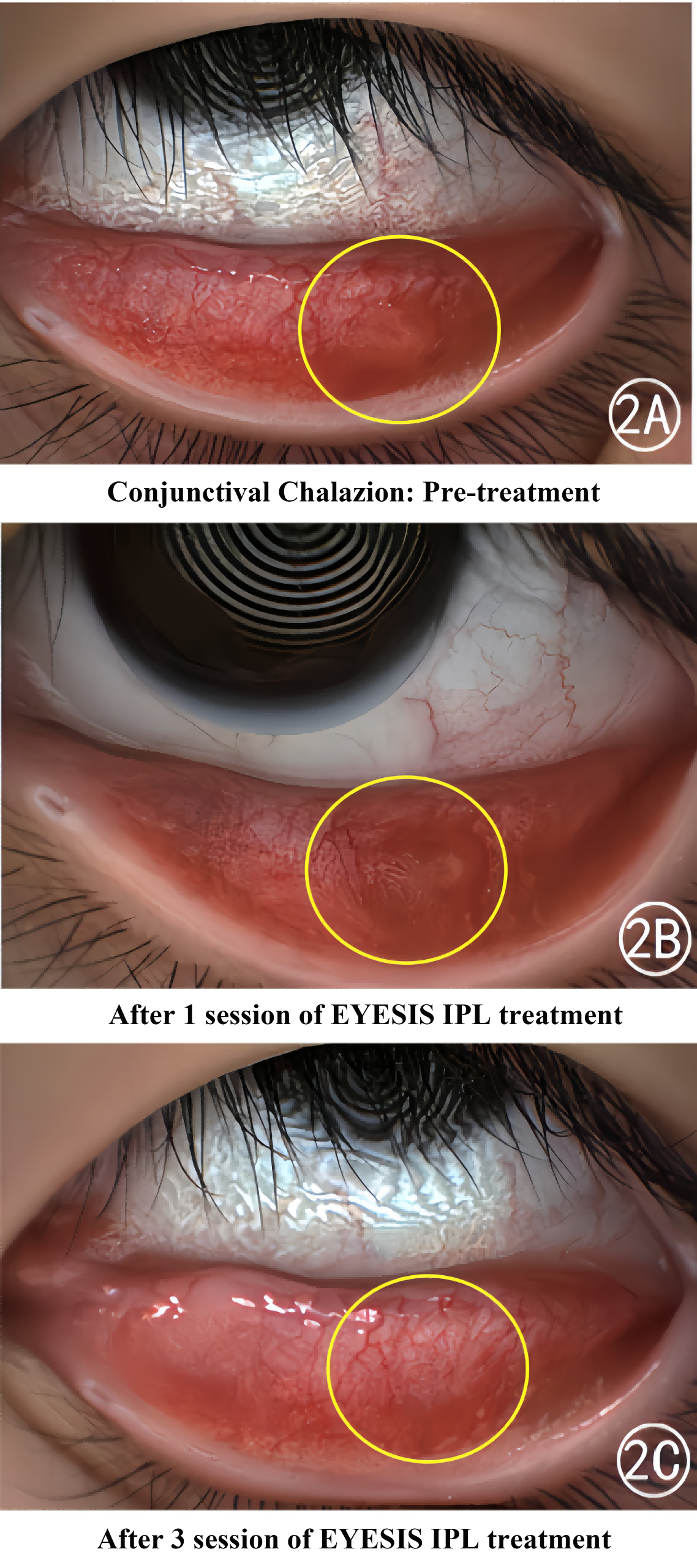
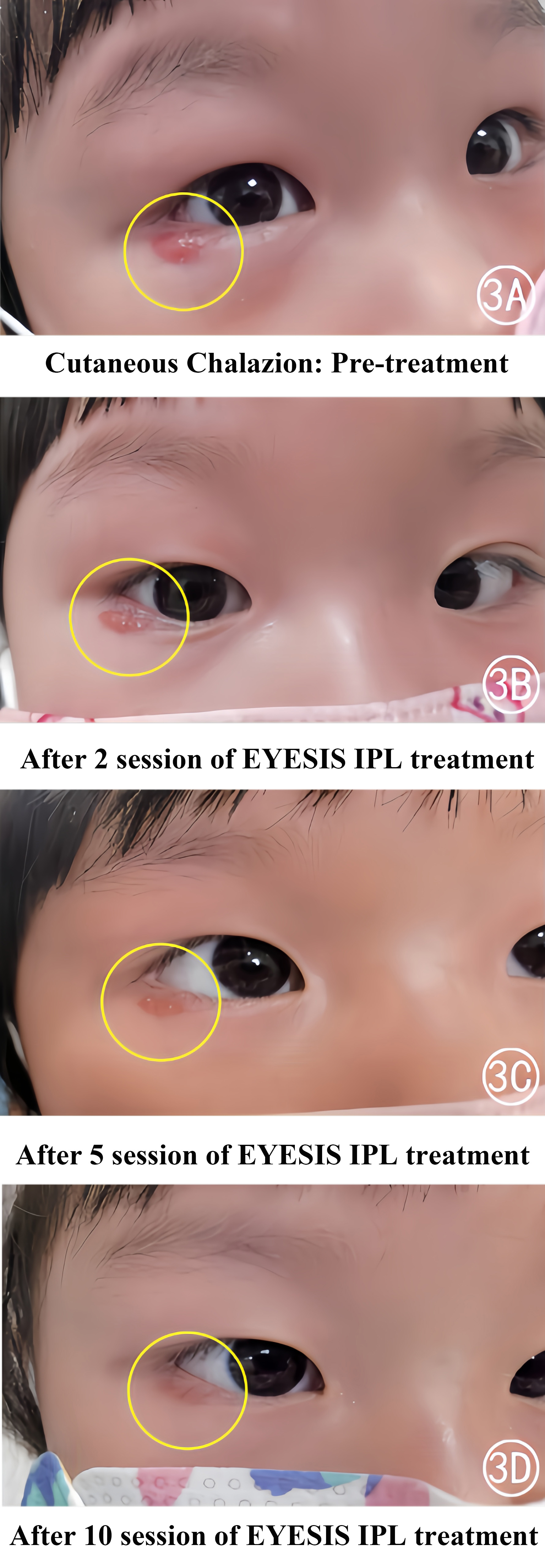
IIPL has a definite therapeutic effect in the treatment of chalazion in children. The cure rate of chalazion on theskin surface is higher than that on the conjunctiva surface. Patients with chalazion for >4 weeks and <8 weeks before treatment have a higher cure rate, and no serious adverse reactions were observed during theIPL treatment.