Professional Information
Hot fumigation Therapy for Dry Eye: A Guide
2024-10-12
Dry eye
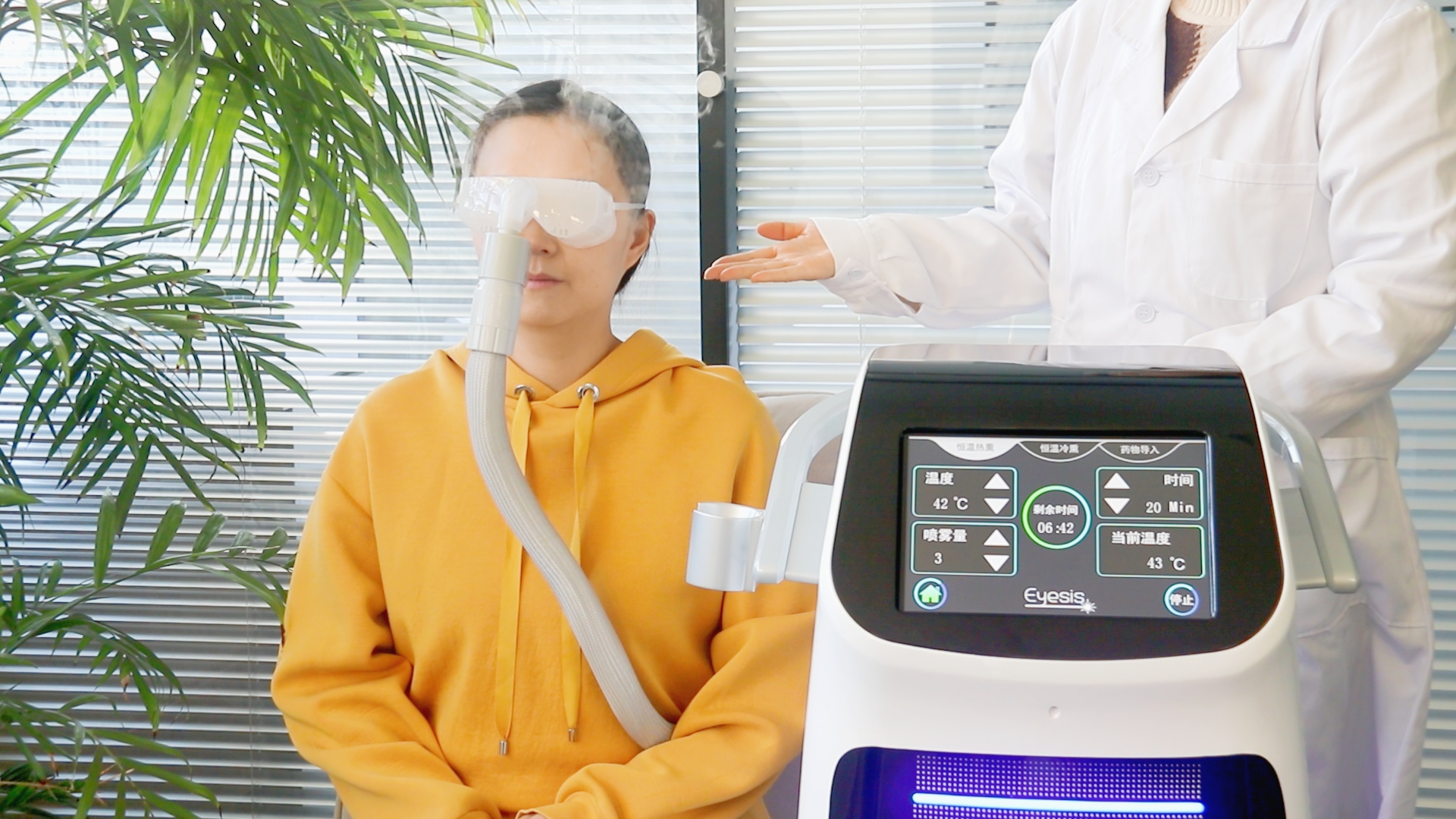
Hot and cold fumigation on the eyelids are a classic physical therapy for dry eye. By harnessing heat conduction, they either warm up or cool down the local area. , we'll take a look at hot fumigation therapy for dry eye.

1、Anti-inflammatory effect
Warm fumigation dilate capillaries, promote ocular blood circulation, accelerate local metabolism, and facilitate the absorption of inflammation and blood stasis.
2、Lipid liquefaction
Hot fumigation heat and dissolve meibum, restoring the fluidity of highly viscous meibum, reducing meibomian gland obstruction, and promoting blood circulation around the glands. Studies have shown that continuous hot fumigation for 12 weeks can reduce the activity of phospholipases that are detrimental to tear film stability, thereby stabilizing the tear film, improving dry eye symptoms, slowing tear evaporation, and alleviating ocular surface damage.
The Chinese Clinical Guidelines for the Diagnosis and Treatment of Dry Eye state that local hot fumigation are the first-line option for patients with lipid-deficient dry eye accompanied by MGD, but attention must be paid to whether the fumigation temperature meets therapeutic requirements. Related research shows that the melting point of meibum in MGD patients is around 35°C, compared to 32°C in healthy subjects. The Chinese Clinical Guidelines for the Diagnosis and Treatment of Dry Eye specify that meibomian gland hot fumigation must reach a temperature of 40–45°C and be maintained for 10–15 minutes.
Although numerous studies have confirmed the benefits of hot fumigation for MGD patients, a practical challenge remains: traditional compress methods often fail to achieve the required therapeutic temperature or maintain it for the necessary duration. Therefore, developing a constant-temperature, comfortable, and highly adherent hot fumigation modality for patients is one of the key research directions in dry eye treatment.
◆ Dry eye, meibomian gland dysfunction (MGD)
◆ Asthenopia (visual fatigue), blepharospasm
◆ Chalazion, hordeolum (stye), blepharitis
◆ Subcutaneous ecchymosis; non-fresh hyphema; subconjunctival hemorrhage — hot fumigation may be applied after 48 hours
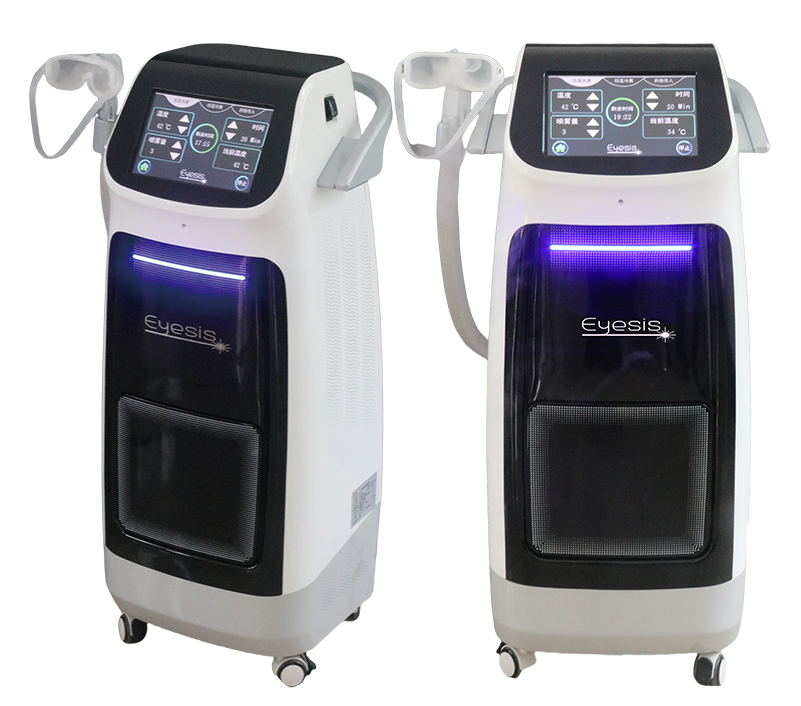
The new-generation EYESIS® constant-temperature hot/cold fumigation dry eye therapeutic device not only provides patients with a constant hot fumigation temperature of 40–45°C to meet dry eye treatment standards, but also allows, under the guidance of an ophthalmologist, the addition of various ocular pharmaceutical solutions for combined drug-and-device therapy, supporting a wide range of customized clinical dry eye treatment protocols.